
What are Mast Cell Tumors (MCTs)?
Mast cell tumors (MCTs) are one of the most common skin tumors found in dogs, but they can also affect cats and appear on or under the skin, as well as in internal organs like the spleen, lymph nodes, and bone marrow. These tumors originate from mast cells, which are a type of immune cell involved in allergic reactions and inflammation. MCTs can vary significantly in their appearance and behavior; some may be benign and slow-growing, while others are highly aggressive and can spread rapidly (metastasize) to other parts of the
body [1, 2].
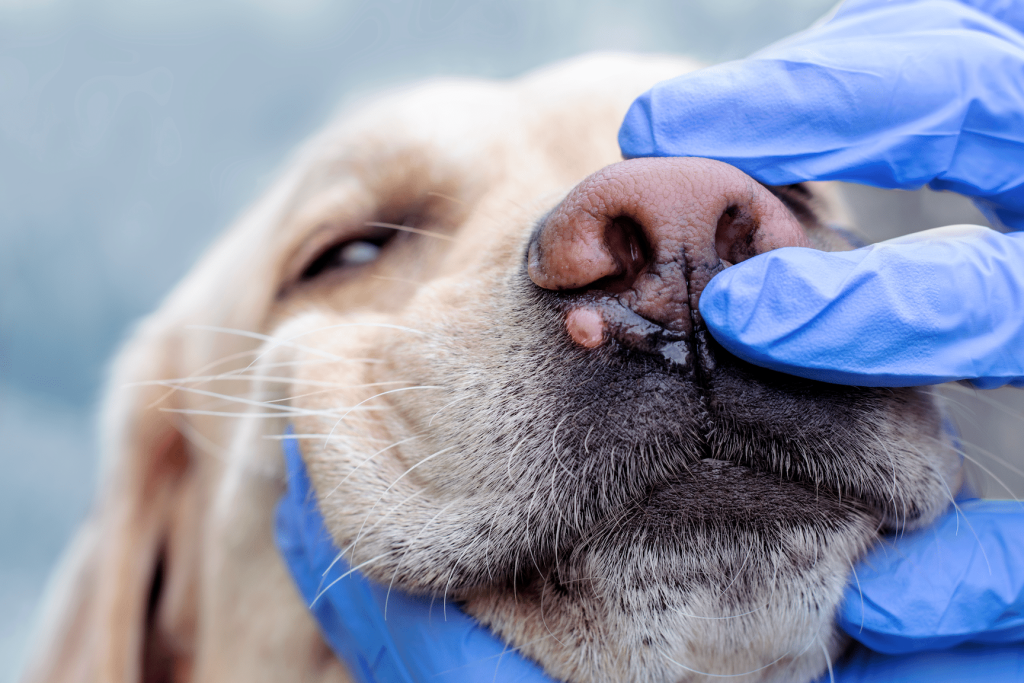
In dogs, MCTs often present as a lump or bump that can be red, ulcerated, swollen, or even fluctuate in size. They can be hairless or covered by hair. While they can appear anywhere on the body, common locations include the trunk, limbs, and head. In cats, MCTs are often found on the head and neck, appearing as hard, hairless, flattened bumps (plagues). However, cats can also develop visceral forms affecting internal organs, particularly the spleen and intestines [3, 4].
A unique characteristic of mast cell tumors is their ability to release various chemicals, including histamine, which can cause local swelling, redness, and itching at the tumor site. These chemicals can also lead to systemic signs such as vomiting, loss of appetite, and gastrointestinal ulcers due to increased stomach acid production [2, 3].
How Veterinarians Manage MCTs
- Treatment options for MCTs include:
- Surgical Excision: This is the primary treatment for most MCTs, especially those on the skin. The goal is to remove the entire tumor with wide, clean margins to prevent recurrence. The success of surgery is highly dependent on achieving complete removal [5].
- Radiation Therapy: For tumors that cannot be completely removed surgically, or for high-grade tumors, radiation therapy may be recommended to kill remaining cancer cells and reduce the risk of recurrence.
- Chemotherapy: Systemic chemotherapy is often used for high-grade tumors, tumors that have spread, or those that cannot be surgically removed. Medications like vinblastine and prednisone are commonly used. Newer targeted therapies, such as tyrosine kinase inhibitors (e.g., toceranib, masitinib), are also available for certain types of MCTs, particularly in dogs [6, 7].
- Novel Therapies: For certain localized MCTs in dogs, intralesional injections (e.g., STELFONTA) can directly destroy tumor cells without the need for surgery [8].
- Symptomatic and Supportive Care: Managing the side effects of mast cell degranulation (e.g., gastrointestinal upset) with medications like antihistamines and antacids is crucial for improving the pet's comfort and quality of life.
- Regular monitoring and follow-up are essential to detect any recurrence or new tumor development.
When Euthanasia Might Be an Option
- Making the decision to consider euthanasia for a beloved pet with mast cell tumors is incredibly difficult, often arising when the disease progresses despite aggressive treatment, or when the pet's quality of life significantly declines. This compassionate choice prioritizes your pet's comfort and dignity above all else. Euthanasia might be considered in situations such as:
- Uncontrolled Tumor Growth and Spread: If the tumors are growing rapidly, are in critical locations (e.g., vital organs), or have metastasized extensively, making further treatment ineffective or impossible.
- Severe Systemic Symptoms: When the release of chemicals from mast cells causes severe and unmanageable systemic signs, such as persistent vomiting, severe gastrointestinal bleeding, or anaphylactic reactions, leading to chronic discomfort and distress.
- Intractable Pain: If the tumor causes severe, chronic pain that cannot be adequately managed with medication, leading to a significant reduction in your pet's quality of life.
- Poor Quality of Life: Despite all medical interventions, your pet's overall well-being has deteriorated. This can manifest as extreme lethargy, loss of appetite, disinterest in previously enjoyed activities, difficulty breathing, or general weakness, indicating that their daily life is a struggle.
- Treatment Futility: When all reasonable treatment options have been exhausted, and the prognosis remains poor, or when the side effects of continued treatment would cause more suffering than benefit.
- Choosing euthanasia in these circumstances is a profound act of love, allowing your cherished companion to find peace and freedom from suffering in a familiar and loving environment.
Our Compassionate Support
At Goodbyemate.com.au, we understand the profound bond you share with your pet and the immense pain that comes with making such a difficult decision. Our mission is to provide a peaceful and dignified at-home pet euthanasia service, allowing your beloved companion to pass away in the comfort and familiarity of their own home, surrounded by those they love most. Our compassionate veterinarians are experienced in gentle euthanasia techniques, ensuring a serene transition.
Beyond the medical procedure, we also offer grief counseling services to support you through this challenging time. We believe that acknowledging and processing your grief is an essential part of healing. Our team is here to provide a comforting presence, answer your questions, and offer resources to help you navigate your loss.
Contact Us
If you are facing this difficult decision or simply wish to learn more about our services, please do not hesitate to reach out. We are here to offer guidance, support, and compassionate care.
You can contact us on 1300 580 777 or email us at contactus@goodbyemate.com.au.
References
[1] VCA Animal Hospitals. Mast Cell Tumors in Dogs. Retrieved from https://vcahospitals.com/know-your-pet/mast-cell-tumors-in-dogs
[2] American College of Veterinary Surgeons. Mast Cell Tumors. Retrieved from https://www.acvs.org/small-animal/mast-cell-tumors/
[3] PetMD. (2022, October 26). Mast Cell Tumors in Cats. Retrieved from https://www.petmd.com/cat/conditions/cancer/mast-cell-tumors-cats
[4] VCA Animal Hospitals. Mast Cell Tumors in Cats. Retrieved from https://vcahospitals.com/know-your-pet/mast-cell-tumors-in-cats
[5] Journals.sagepub.com. (2012, December 19). Mast Cell Tumors in Cats. Retrieved from https://journals.sagepub.com/doi/full/10.1177/1098612X12470343
[6] Todaysveterinarypractice.com. (2024, April 5). Simplifying the Approach to Canine Mast Cell Tumors. Retrieved from https://todaysveterinarypractice.com/oncology/simplifying-
the-approach-to-canine-mast-cell-tumors/
[7] Frontiersin.org. (2023, June 7). Tyrosine kinase inhibitors as an alternative treatment in canine mast cell tumors. Retrieved from https://www.frontiersin.org/journals/veterinary-
science/articles/10.3389/fvets.2023.1188795/full
[8] Stelfonta.com. 87% success treating mast cell tumors. No surgery needed. Retrieved from https://stelfonta.com/about-stelfonta/