What is Osteosarcoma?
Osteosarcoma (OSA) is the most common and aggressive primary bone tumor found in dogs, though it can also occur in cats. This malignant cancer originates from bone-forming cells and rapidly destroys normal bone tissue while producing abnormal, cancerous bone. It is highly metastatic, meaning it has a strong tendency to spread to other parts of the body, most commonly the lungs, even before the primary tumor is diagnosed [1, 2].
In dogs, OSA most frequently affects the long bones of the limbs (appendicular skeleton), particularly near the shoulder, wrist, knee, or ankle joints. It can also occur in other bones, such as the jaw, ribs, or vertebrae. The most common initial symptom is lameness, often subtle at first but progressively worsening, accompanied by swelling, pain, and warmth at the tumor site. The affected bone can become very fragile, leading to pathological fractures (fractures that occur with minimal trauma) [1, 3]. Large and giant breed dogs are disproportionately affected.
In cats, osteosarcoma is less common and generally less aggressive than in dogs. It can affect both the appendicular and axial (skull, spine, ribs) skeleton. Symptoms in cats are similar to dogs, including lameness, swelling, and pain in the affected area. While feline OSA is less likely to metastasize, it is still a serious condition [4, 5].
How Veterinarians Manage Osteosarcoma
- Treatment for osteosarcoma aims to control the primary tumor, manage pain, and delay metastasis. The standard of care often involves a multi-modal approach:
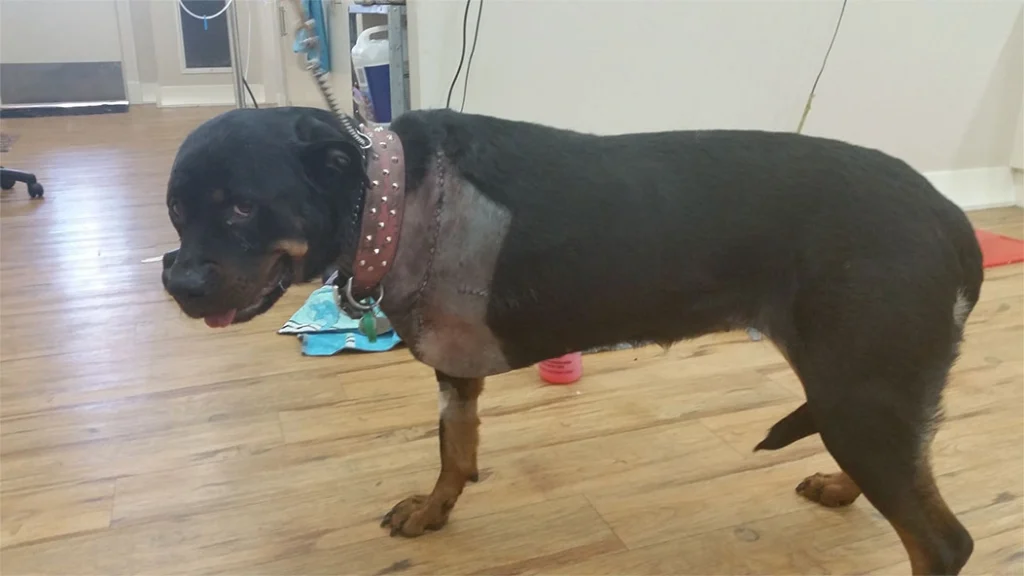
- Surgical Amputation: For appendicular osteosarcoma, amputation of the affected limb is often recommended to remove the primary tumor, alleviate pain, and improve quality of life. While a difficult decision for owners, most dogs adapt remarkably well to three legs [6].
- Limb-Sparing Surgery: In select cases where the tumor is in a suitable location and has not spread, limb-sparing surgery may be an option. This procedure removes the cancerous bone and replaces it with a bone graft or prosthesis, preserving the limb [6].
- Chemotherapy: Chemotherapy is crucial for managing the metastatic potential of OSA. It is typically administered after surgery (adjuvant chemotherapy) to target microscopic cancer cells that may have already spread. Common chemotherapy drugs include carboplatin and doxorubicin. While chemotherapy rarely cures OSA, it can significantly extend survival times [7, 8].
- Radiation Therapy: Radiation therapy can be used for pain palliation when amputation is not an option or declined by the owner. It can temporarily reduce pain and swelling at the tumor site, improving comfort. It can also be used in conjunction with limb-sparing surgery [9].
- Pain Management: Aggressive pain management is a critical component of care for pets with OSA, regardless of whether surgery is performed. This may involve a combination of anti-inflammatory drugs, opioid pain relievers, and other medications to ensure the pet"s comfort.
- Regular monitoring of blood work and clinical signs is essential to adjust treatment as the disease progresses.

When Euthanasia Might Be an Option
- Making the decision to consider euthanasia for a pet with osteosarcoma is one of the most challenging and compassionate choices a pet owner can face. Despite aggressive treatment, OSA is a highly aggressive cancer, and there comes a point when the disease progresses beyond the reach of effective therapies, or when the pet"s quality of life is severely compromised. This compassionate choice is made out of profound love to prevent prolonged suffering and ensure a peaceful, dignified end. Euthanasia might be considered in situations such as:
- Unmanageable Pain: If the bone tumor causes severe, intractable pain that cannot be adequately controlled with medication, leading to constant distress, an inability to bear weight, or a refusal to move.
- Pathological Fractures: When the weakened bone fractures, causing acute and severe pain that cannot be managed, or if the fracture makes the limb unusable and causes significant suffering.
- Extensive Metastasis: If the cancer has spread extensively to vital organs, particularly the lungs, leading to severe respiratory distress, organ failure, or other systemic signs that significantly impair quality of life and are unresponsive to treatment.
- Severe Functional Impairment: If the tumor"s size or location severely impacts the pet"s ability to walk, eat, or perform basic functions, making daily life a struggle and causing significant discomfort.
- Poor Quality of Life: Despite all medical interventions, your pet"s overall well-being has deteriorated significantly. This can manifest as extreme lethargy, loss of appetite, disinterest in previously enjoyed activities, severe weakness, or a general inability to experience comfort or joy.
- Treatment Futility: When all available and appropriate treatment options have been exhausted, and the disease continues to progress, or when the side effects of further treatment would cause more suffering than benefit, leaving no hope for recovery or improved quality of life.
- Choosing euthanasia in these profound moments is an act of ultimate love and selflessness, allowing your cherished companion to pass away with dignity and peace, free from pain, in the comfort of their familiar surroundings.
Our Compassionate Support
At Goodbyemate.com.au, we understand the profound bond you share with your pet and the immense pain that comes with making such a difficult decision. Our mission is to provide a peaceful and dignified at-home pet euthanasia service, allowing your beloved companion to pass away in the comfort and familiarity of their own home, surrounded by those they love most. Our compassionate veterinarians are experienced in gentle euthanasia techniques, ensuring a serene transition.
Beyond the medical procedure, we also offer grief counseling services to support you through this challenging time. We believe that acknowledging and processing your grief is an essential part of healing. Our team is here to provide a comforting presence, answer your questions, and offer resources to help you navigate your loss.
Contact Us
If you are facing this difficult decision or simply wish to learn more about our services, please do not hesitate to reach out. We are here to offer guidance, support, and compassionate care. You can contact us on 1300 580 777 or email us at contactus@goodbyemate.com.au.
References
[1] Morris Animal Foundation. (2025, April 17). Osteosarcoma in Dogs: Symptoms, Treatment & Research Advances. Retrieved from https://www.morrisanimalfoundation.org/article/osteosarcoma-in-dogs
[2] American College of Veterinary Surgeons. Bone Tumors in Cats and Dogs. Retrieved from https://www.acvs.org/small-animal/bone-tumors-in-cats-and-dogs/
[3] Matthews Vet. (2020, May 14). Signs & Symptoms of Bone Cancer in Dogs. Retrieved from https://www.matthews.carolinavet.com/site/pet-health-blog/2020/05/14/signs-symptomsof-bone-cancer-in-dogs
[4] PetMD. (2022, October 26). Osteosarcoma In Cats. Retrieved from https://www.petmd.com/cat/conditions/musculoskeletal/osteosarcoma-cats
[5] PetCure Oncology. What You Should Know About Osteosarcoma (Bone Cancer) In Cats. Retrieved from https://petcureoncology.com/what-you-should-know-about-osteosarcomabone-cancer-in-cats/
[6] University of Minnesota. (2024, January 24). Tackling new strategies for canine bone cancer at MCC. Retrieved from https://cancer.umn.edu/news/tackling-new-strategiescanine-bone-cancer-mcc
[7] Veterinary Practice. (2023, November 8). An update on diagnosis and treatment of canine appendicular osteosarcoma. Retrieved from https://www.veterinarypractice.com/article/diagnosis-treatment-canine-appendicular-osteosarcoma
[8] AKC Canine Health Foundation. Bone Cancer in Dogs. Retrieved from https://www.akcchf.org/disease-history/bone-cancer-in-dogs/
[9] NC State Veterinary Hospital. Radiation Oncology: Bone Cancer. Retrieved from https://hospital.cvm.ncsu.edu/services/small-animals/cancer-oncology/radiationoncology/radiation-therapy-for-bone-cancer/